

The Client
You can buy the most expensive revenue stack in the world. Get your team Salesforce, HubSpot, and all the shiny intent data streams they could dream of. But even with all that, you can still find yourself drowning under the same operational problems. That was the situation our client found themselves in. This well-funded cybersecurity technology platform looked unstoppable on paper. They boasted a clear target list of C-suite security decision-makers, international sales territories, and a glistening go-to-market strategy. However, inside the machine, the company’s gears were grinding to a halt.
Their competitive edge was also the source of their problems. Speed. On one hand, they can perform feats like stopping unknown threats and ransomware in less than 20 milliseconds. Their power attracted significant press coverage and venture capital funding. On another hand, after pushing for growth at light speed, their GTM operational foundation split under the pressure.
The Problem
With a value prop as good as theirs and the budget to match, what could go wrong?
Evidently, lots. They had loaded up on too much technology in too short a time. And truthfully, it's a common mistake. Instead of locking down their processes, they went all-in on enterprise-level tools without understanding how they’d use them. In other words, they took a Rolls-Royce on a road trip with no map.
Rather than letting the tools take them where they wanted to go, they were spending eye-watering amounts of time trying to get the tools to do the basics.
Over time, the patched-together system had accumulated nearly 200 different automation workflows. Some were relics of past campaigns. Others were actively fighting against each other. The worst was that their lead routing flow was completely broken. The entire team was left scratching their heads, wondering where those high-value leads went when the logic failed. What they did know for sure was that the leads weren't reaching the sales team.
Then, there were the system sync errors. The integration between HubSpot and Salesforce had been built for speed without direction. In short, it was nail-bitingly fragile. The sales team was supposed to be selling, not playing tech support. But the team wasted valuable time-to-response hours troubleshooting these errors. Sometimes they even needed to manually export/import data between systems as a workaround. Not only was all of this costing them the speed they originally wanted, but it also cost them their reports.
It was a difficult position (to say the least).
More software wasn’t going to get them out of the problem it had gotten them into. They would need a technical solutions partner capable of staring down their messy multi-platform environment without blinking.
The Solution
The ClearPivot team stepped in to help. We were ready to start the heavy lifting immediately. Our first priority was a deep-dive technical audit. After all, we needed to map out the current state in order to plot out where we wanted to get to. Our team combed through object properties and database segments line by line, identifying duplicates and standardizing naming conventions to match our best-practice recommendations. We tackled the nearly 200 workflows by doing extensive pruning and consolidation. And to top it off, our team rewrote the territory logic to ensure that companies in Salesforce and HubSpot were routed exactly where they were supposed to go.
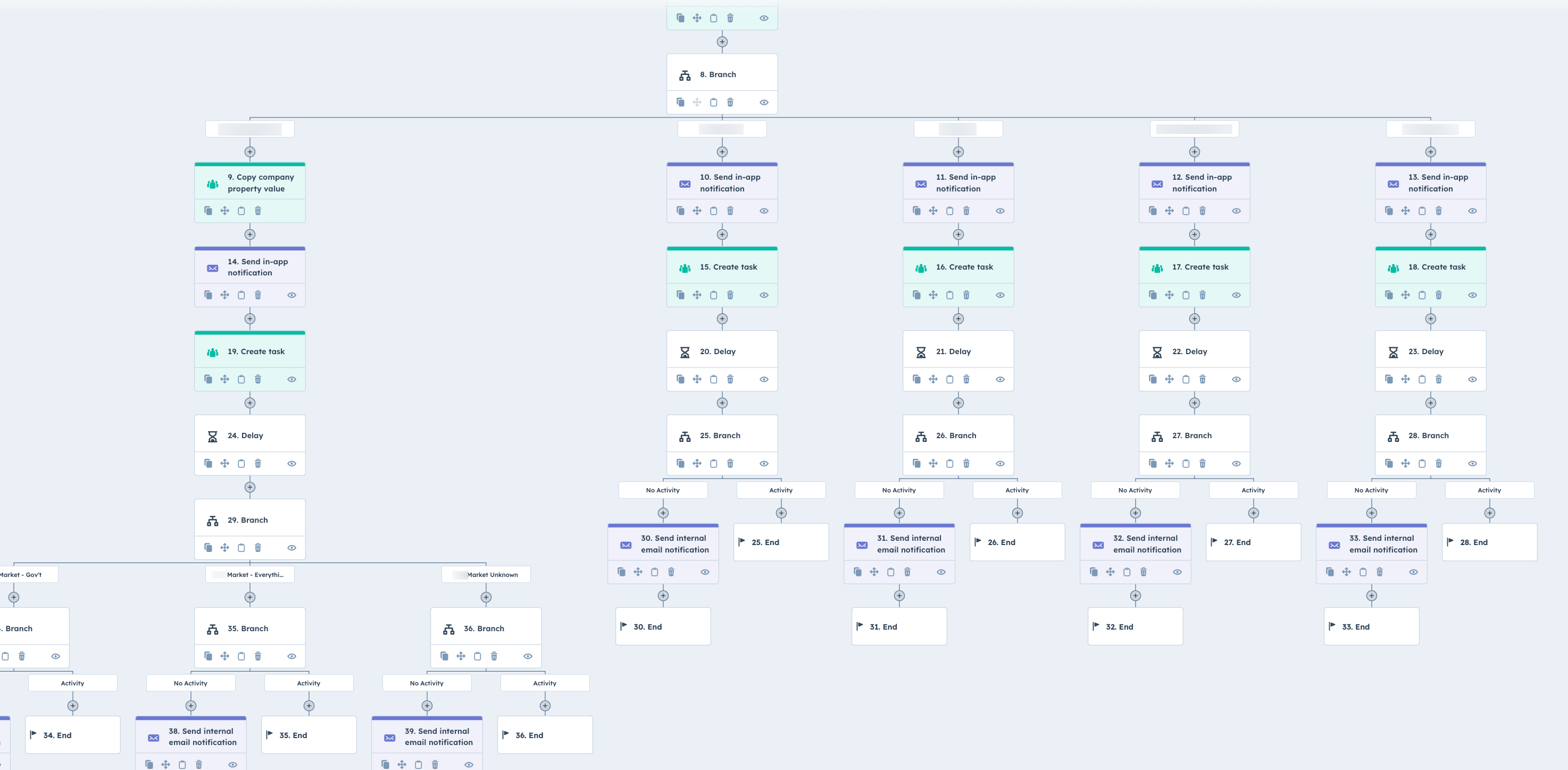
Once the plumbing was fixed, we moved to stabilize their Salesforce-HubSpot integration. The team cleaned up the synchronization errors that had plagued their team for months. This made the connection between HubSpot and Salesforce reliable, so the team could actually trust the data they were seeing. We also stepped in to clean up user permissions and access. Now, as their team changed, their security and data governance would stay intact. We turned a fragile and error-prone link into a sturdy bridge between marketing and sales.
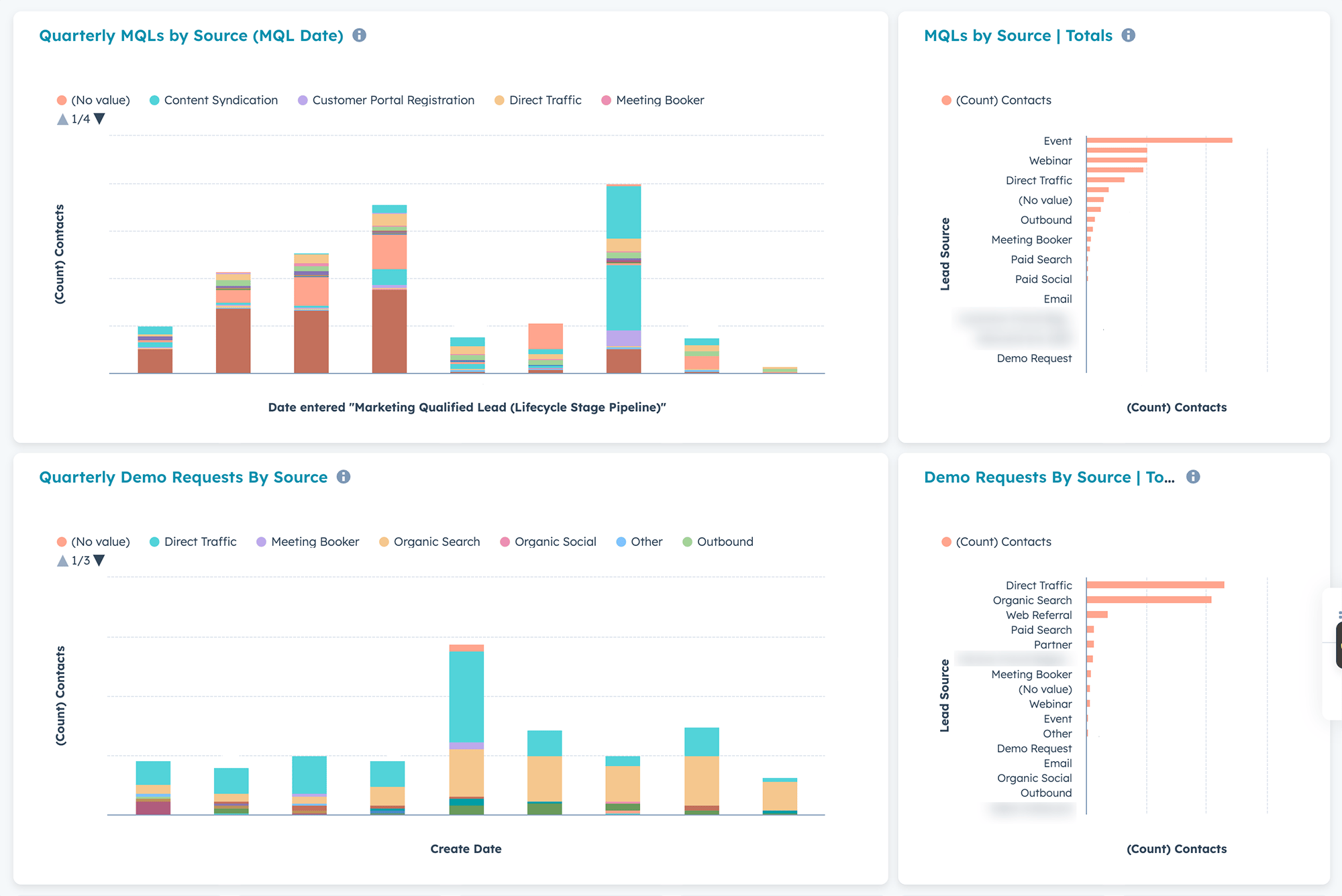
Simultaneously, we relieved their bandwidth bottleneck by taking over operational execution. We helped them fix up their CRM back-end at the same time that we were building out the front-end marketing assets that they needed. We built email templates for them so that their marketing team could use their creative talents to take them further. We implemented a new lead scoring system to push the best contacts to the top of the queue, and handled the execution so their remaining internal team could step back from the ledge of burnout. They could finally focus on high-level strategy rather than fighting fires.
The Results
The immediate impact was a dramatic reduction in operational suffering. The daily fire drills regarding missed leads or broken syncs stopped. The systems were no longer fighting each other. Now, they were consistently and accurately feeding the sales team. And with the data cleaned and the workflows streamlined, the client could finally trust their reporting. We had turned a source of anxiety and stress into a reliable revenue machine.
Ultimately, we gave the client the freedom to focus on what mattered most. Their leadership team no longer had to worry about whether the pipes were leaking in their CRM. They knew we had it handled. We turned their marketing operations from a sticking point that squashed growth efforts into a flexible frame that supported it. Moral of the story? The right partner is just as important as the right software.
