

The Client
Data centers run hot, both literally and figuratively. When demand spikes or systems falter, the pressure moves fast and lands hard. This client operates inside that reality every day. They design and sell transceivers, cabling, and other components that support mission-critical infrastructure for tech. Their products equip data centers to carry information and traffic without lapsing no matter what stress they're put under.
As global demand for data infrastructure exploded, the company bolted into a new phase of growth in a compressed window of time. Their CEO wanted to capture the opportunity with discipline. The team had longstanding customer relationships and technical expertise that would form the backbone of the business, and given the right systems, this could be a once-in-a-lifetime opportunity.
The head of sales was clear from the start that salespeople needed to be focused on selling and relationships, which was what they were best at. The company already had rock-solid target account relationships and product expertise, but their revenue operations were a blank slate. The team didn't even have a CRM to work with. The CEO wanted each person to focus on what they do best, so while the sales team sold, he set out to address the operational challenges.
The Problem
Growth would crack any unstable process. The little features of their structureless workflow, like not being able to tie emails to a deal, could even deprive the opportunity of its fuel. Customer context was only stored in someone's head or one-off Excel spreadsheets. As the company planned hiring, new reps would need clarity on processes, and leadership needed a way to see the story behind the numbers.
The company's challenge was turning a powerful but loosely structured sales operation into a plan that could bear the weight of high-volume activity. They'd need to anticipate extended sales cycles and in-depth technical conversations, while providing leadership with an eagle's-eye view into revenue and pipeline health. Since the initial idea was to just "let sales sell," there was no push to immediately log data. Attribution models didn't reflect how deals actually progressed, and Sage 100, their ERP system, lived in a bubble. Though sales were happening, the company knew it couldn't use this model for accurate pipeline tracking.
As hiring picked up, these gaps started to carry real risk. Without standardized documentation, permission structures, and training frameworks, each new salesperson would develop their own selling approach, further fragmenting data and weakening reporting. Without knowing what was selling or even in the pipeline, the marketing team also found itself at an impasse. That team was running on incomplete tracking and unreliable analytics that made it difficult to assess contacts or campaign performance with confidence.
Forecasting raised the stakes even more. There would be so many details that an eagle's-eye view of data would be a necessity. They would have to have a rolling view into revenue that was grounded in customer history. Sage 100 held the historical and inventory data, including details that sales needed for quoting, planning, and forecasting conversations. Yet sales teams needed that context where they worked, with dashboards that supported planning and review. What could the CEO rely on during a board conversation, for example, if he didn't have a trustworthy reference to show them what was happening?
At the same time, marketing was similarly structureless. There was no software to send product emails, and their website was still in the process of redesigning. They didn't have even a single form on their website yet. Since the operating model had not yet caught up to the pace of growth, the CEO decided that it was time to bring in the pros. So he called ClearPivot.
The Solution
ClearPivot started the project with a go-to-market operational build to stabilize what existed while preparing the organization for explosive growth. The project kicked off with the ClearPivot team and client team working together to design the processes that the teams would use. They used real feedback from the sales, service, and marketing teams to make sure that these would support their work instead of creating extra hurdles. ClearPivot used the results of this collaboration to create a detailed customer lifecycle map showing what would happen at each part of a person’s interaction with them.
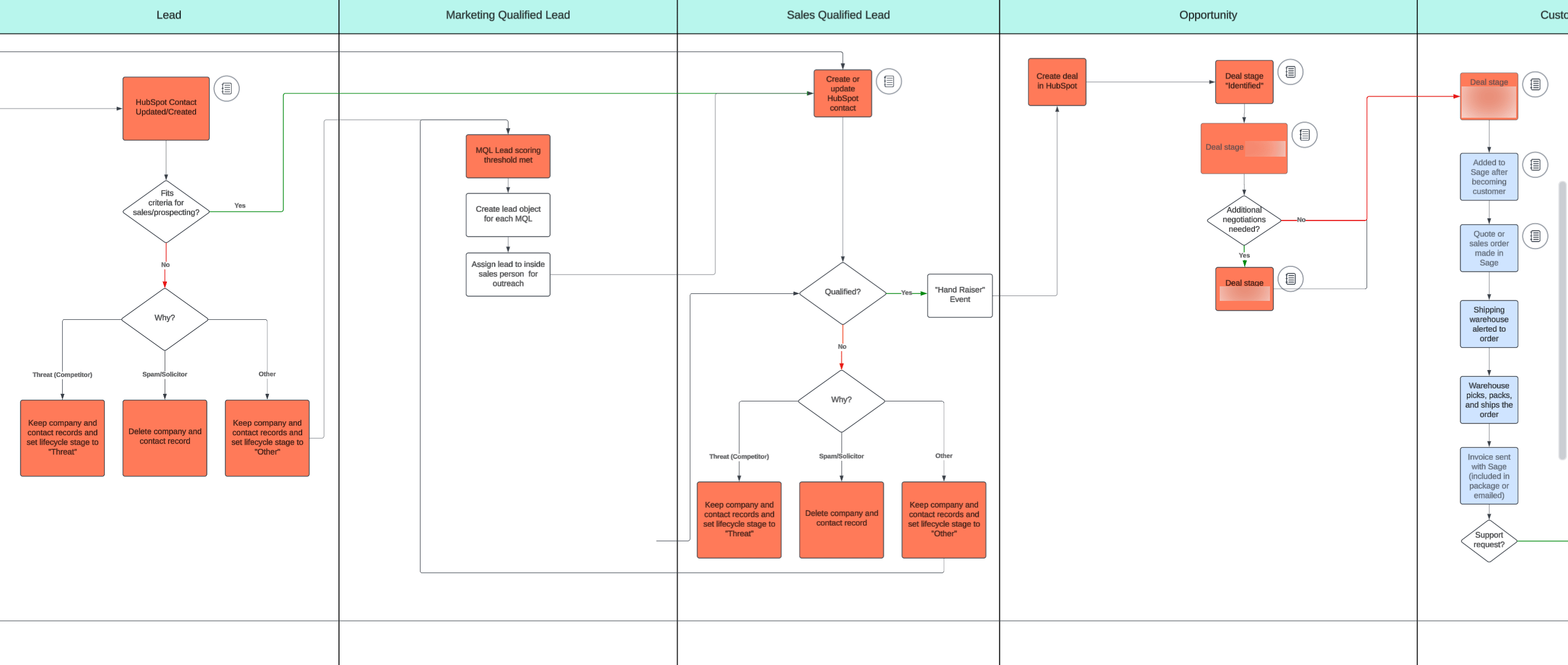
From there, the work moved into implementing HubSpot. This would be the client's first-ever CRM, giving the ClearPivot team the opportunity to build it out correctly from scratch with no pre-existing technical debt. ClearPivot set up sales pipelines, lifecycle stages, user profiles, paid seats, the sales extension, and mobile app access so reps could work where conversations already happened. Permission sets followed, including Sales Rep and Sales Manager structures, plus privacy rules that reflected record ownership and managerial oversight. Contact ownership and visibility helped reinforce accountability and kept ownership logic clean as the team expanded.
Next, ClearPivot performed a full import of historical data from Sage to HubSpot. The team reformatted contact and company records to standardize phone numbers, email fields, and location info. They also identified and filled in missing data, such as the names of lifecycle stages for current and former customers. In the first phase of the project, years of accumulated inconsistencies from ungoverned field usage were fixed. After ensuring the data was correct, ClearPivot updated record views for contacts, companies, and deals, so sales teams could work efficiently from a single screen. For the rest of the team, they fine-tuned permission sets and privacy rules to reflect ownership and managerial oversight. Along the way, lifecycle stages for current and former customers received consistent updates, which supported accurate dashboards and segmentation.
Once the base data could support daily work, ClearPivot rebuilt the user experience inside the CRM. Contact views, company views, and deal views received customization, allowing reps to act from a single screen. Record views aligned with the sales process, and filtered dashboards gave the sales team a clean window into their priorities. ClearPivot also rolled out a set of sales team dashboards to help empower team members to use their data to their advantage. The idea was for each team member to feel like they understood the new tools, so ample follow-up documentation and walkthroughs helped adoption stay steady even as schedules changed.
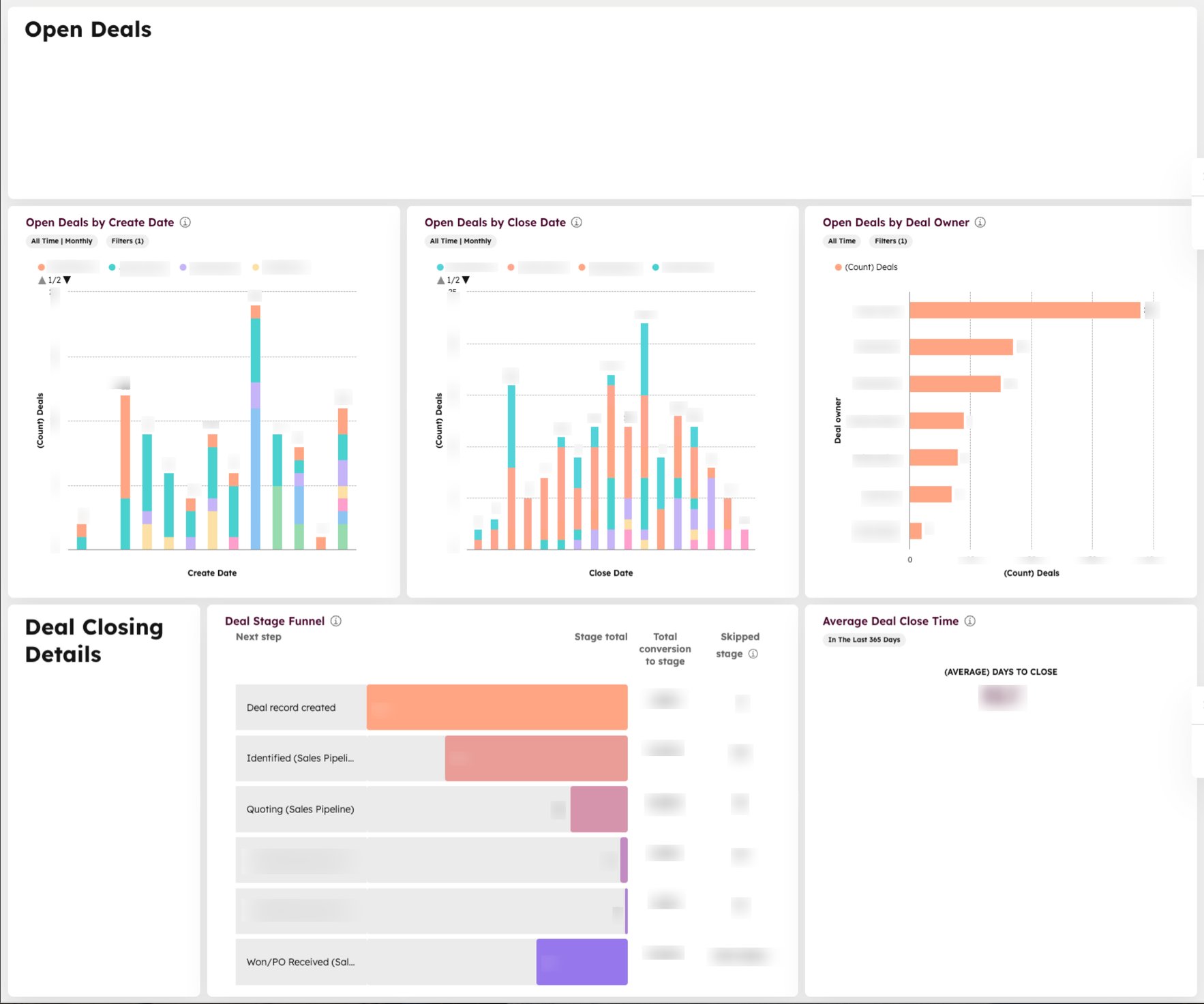
ClearPivot documented the quote-to-cash process in two parts, then used those artifacts to support consistency across quoting, follow-through, and downstream handoffs. A quote template in HubSpot soon followed, built from an existing example that leadership already used. To support activity discipline, ClearPivot planned and built task logic for deal hygiene, including prompts for updating deal amounts, overdue close dates, deal source fields, and duplicate issues from filtered record views. Weekly deal pipeline review rhythms supported ongoing adoption, and check-in structures with inside and outside sales teams kept the system grounded in day-to-day reality.
Analytics and reporting became richer with each sprint. ClearPivot planned dashboards around sales use cases, including deals by month, deals by user, pipeline progression, and sales activity. Service dashboards followed as the HubSpot Service Hub motion took shape, focused on key pipeline metrics and service activity visibility. Company-level dashboards supported segmentation views by lifecycle stage, state, industry, and territory, and leadership reporting matured into board-ready monthly and quarterly reports that executives could review quickly. Those reports required strong supporting data, so ClearPivot checked for missing fields, verified property definitions, and reinforced the reporting layer with audit work over time.
Once the CRM foundation was established, the ClearPivot team then moved into marketing operations. And by this point, the client's new website was live. ClearPivot created and connected website forms to HubSpot to make sure that no detail was lost. They built marketing reports using ClearPivot dashboard references for lead generation and marketing performance, then maintained a steady cadence of monthly marketing analytics meetings with the department head. Lead scoring work started with planning, moved into a combined scoring model, and later went through further updates as job titles and exclusion filters tightened to cut down noise.
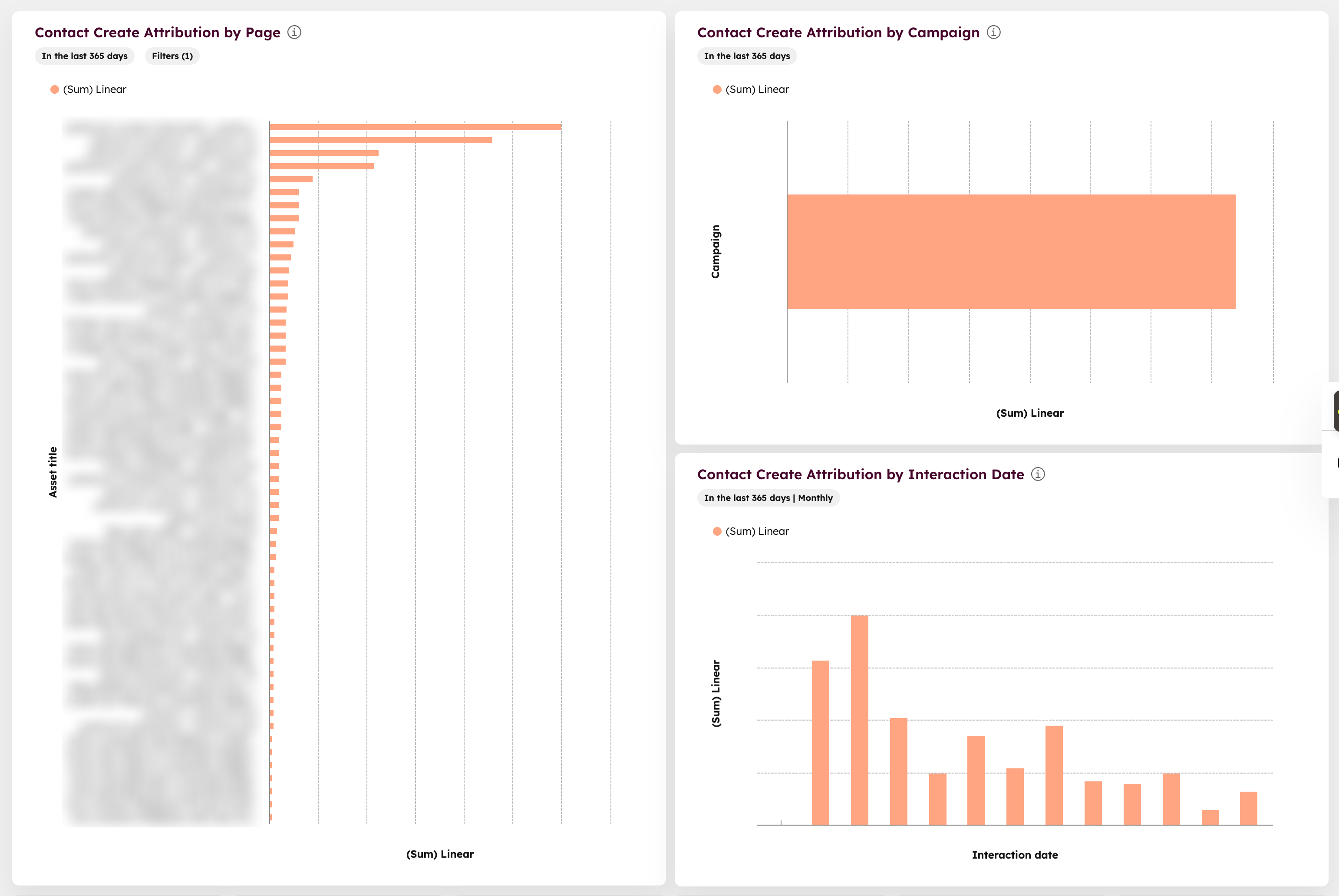
As the client's sales and marketing departments were getting their own help, ClearPivot worked with their Sage 100 admins to develop ongoing HubSpot-Sage syncs for object records across the two platforms. This helped the client's team see which customers were contributing the most to their ongoing revenue, and move away from performing exclusively manual data imports. All of these efforts tied back to the essence of the CEO’s request: let the experts do what they do best and give them a system that helps.
Product governance and roadmap work helped keep the portal healthy during periods of change. ClearPivot reviewed and identified useful HubSpot betas across multiple sprints, including campaign UTM cleanup, CRM timeline and association card updates, and other workspace improvements. That roadmap discipline mattered because new features change how teams work. The system needed a steady hand, and the team needed clear guidance on what mattered now versus what could wait.
The Results
By the end of the project, the client's sales team had grown to over five times its original size. By this time, everyone was operating with a system built to support explosive growth, sustained activity logging, and complex, technical sales. The brand-new HubSpot implementation that they started off with had transformed into a solid system that assisted each person in their day-to-day work. It showed real activity across marketing, sales, and operations, and gave leadership forecasting and reporting grounded in real data. Sales teams could see detailed histories of conversations, requested samples, and quotes at a glance. And all their processes were documented clearly enough for everyone to know how things worked.
Marketing operations sprang forward with a strong pace, driven by weekly project reviews and projects done in tandem. The two teams identified criteria for lead scoring and used real data to update buyer personas. From this, they were able to build marketing dashboards that guided precision efforts. They even configured buyer intent functionality using closed-won data and curated target account lists, helping marketing and sales align around shared definitions of fit and priority. All this data made sure that not a single touchpoint was lost between marketing and sales. Everyone had complete data.
Sales operations bloomed with structured routines that supported lead quality review and deal activity monitoring. Each person could finally see their own progress and balance their own workloads. ClearPivot gave them workflows that paced follow-up tasks intentionally, letting reps pause workflows during travel or vacation so they didn't come back to a mountain of to-dos. The team used its newly generated task queues to tackle incomplete deal data and maintain records without calling in help for cleanups.
The integration between HubSpot and Sage aligned records with finances, and the documented quote-to-cash process reduced friction across departments.
Opportunity rarely waits for perfect wiring. Opportunity rewards teams that build strong structures before traffic surges. With their data and teams on the same page, the company can see demand forming, forecast with confidence, and keep every rep working from the same source of truth. So what happens when the next wave hits the data center floor? Their systems carry the load as cleanly as their cabling does, and that opportunity stays theirs to take.
